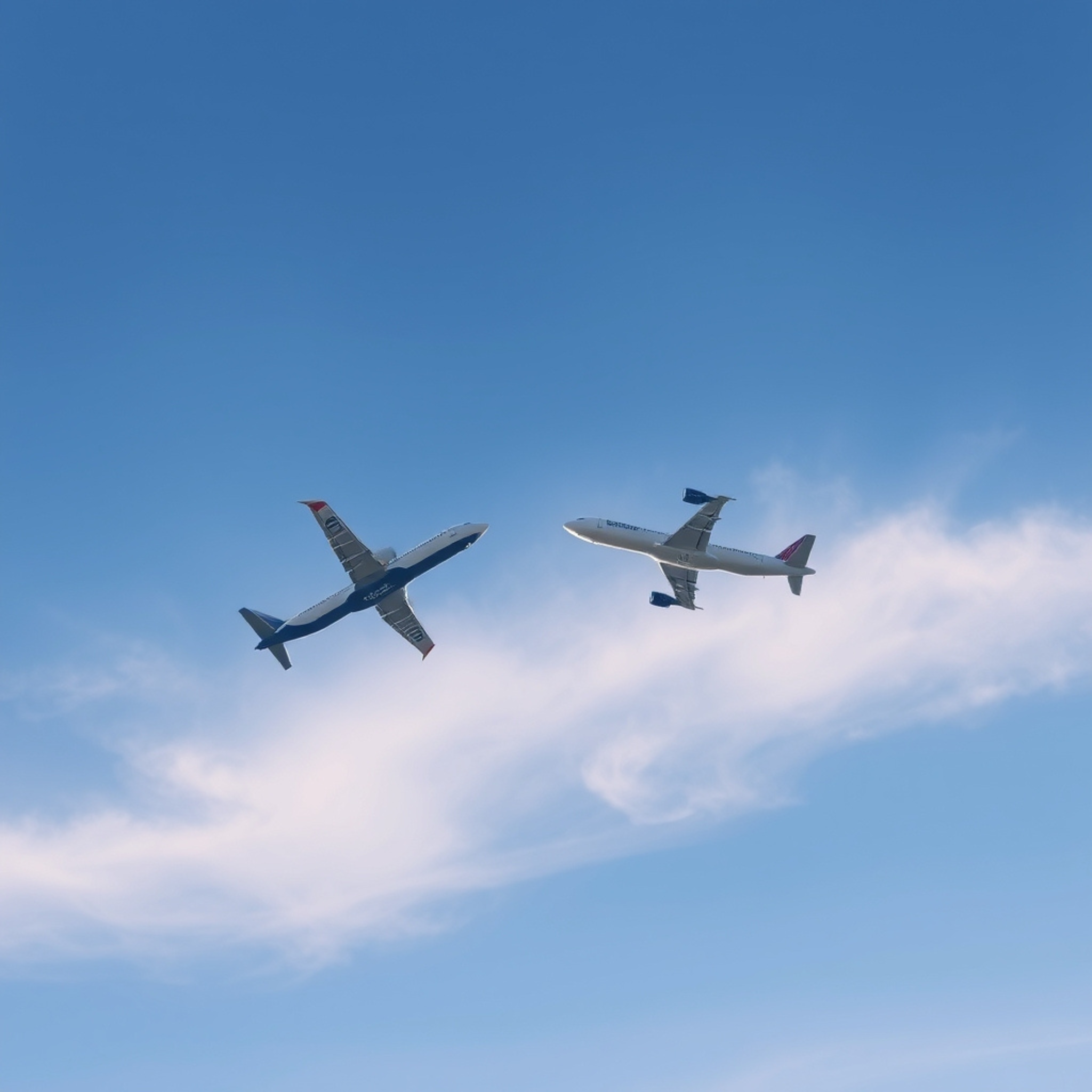
When we think about traffic, we usually imagine cars on busy roads, waiting at traffic lights. But did you know there’s also traffic in the sky? Airplanes may look like they’re flying freely, but they actually follow organized routes — just like cars do on highways! Let’s see how this amazing system works.
The Sky’s Invisible Highways
Airplanes don’t just fly wherever they want. The sky is divided into air routes, also known as airways. These are invisible paths that help pilots travel safely between airports.
Each plane follows a planned route made up of waypoints (special locations marked by GPS). Think of them like signposts in the sky that help pilots know where to go next.
Who Controls the Traffic?
Just like traffic police manage cars, Air Traffic Controllers (ATC) manage airplanes. They work in towers at airports and in special control centers around the world.
Controllers use radar screens and radio communication to guide pilots. They tell them when to take off, what height to fly, and when to land — making sure all planes stay a safe distance apart.
Levels in the Sky
To avoid crashes, airplanes don’t fly at the same height. The sky is divided into different levels, like invisible floors in a giant building.
Some planes fly higher, some lower — depending on their direction and size. For example, planes flying east might be at one level, while westbound planes are at another. This system keeps everyone safe and organized.
What Happens During Takeoff and Landing
Airports can be very busy, especially in big cities. Controllers carefully schedule takeoffs and landings, almost like a choreographed dance. Each plane must wait its turn on the runway, take off in order, and land one at a time.
At night or in bad weather, computers and radar help pilots land safely, even when they can’t see clearly.
The Big Picture
Every day, more than 100,000 planes fly around the world — and yet, air travel is one of the safest ways to travel! That’s because of the careful teamwork between pilots, air traffic controllers, and advanced technology guiding every flight.
In short: The sky may look open and endless, but it’s actually full of invisible paths, signals, and helpers working together — keeping the world’s flying traffic safe, smooth, and right on time!